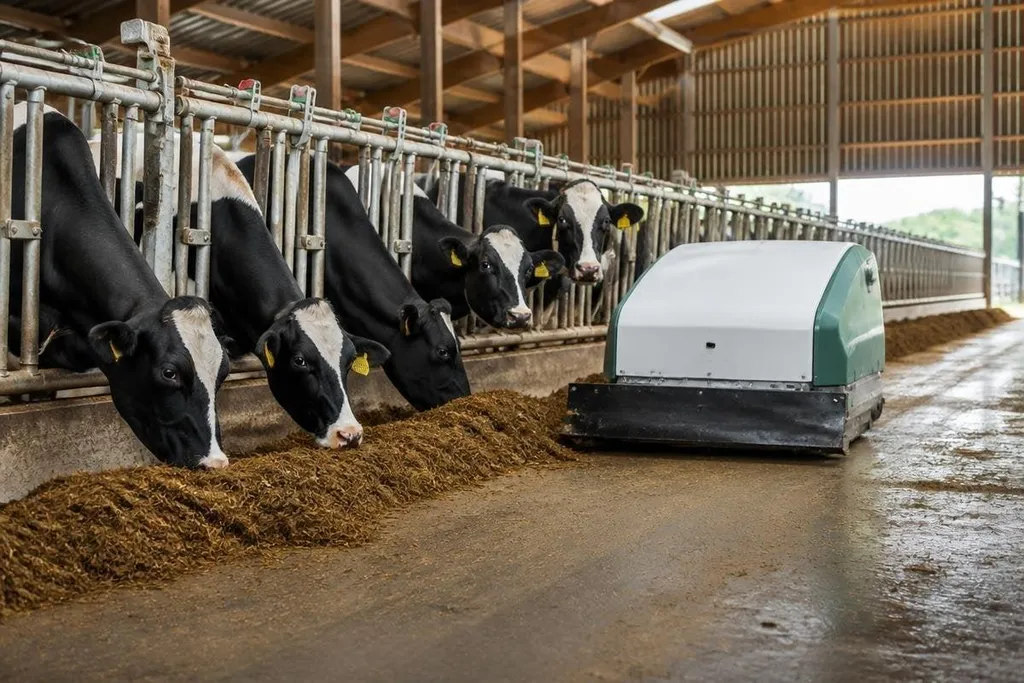
A livestock robot doesn't need to replace a farm worker to matter. It needs to handle one repeated job safely, keep working around animals, and give the farmer useful information when something changes.
The near-term path is practical: milking, feed delivery, manure work, health checks, and movement between buildings. These jobs happen every day, which gives automation a clear test.
- Milking robots already guide cows through an automated milking station.
- Feed robots can move along set routes and push feed back toward animals.
- Health systems use cameras, tags, and other sensors to spot changes in movement or eating.
The first jobs are easy to repeat
Livestock farms have many tasks that follow a set pattern. A milking robot can identify an animal, place teat cups, record milk data, and release the cow when the process ends.
The exact setup differs by farm, but the job follows the same basic sequence each time.
Feed work has a similar shape. A robot can carry feed to a pen or push feed closer to animals after people place it in the feeding area. That can reduce the number of routine trips a worker makes, leaving more time for repairs, animal care, and checks that need human judgment.
Manure removal is another clear use. A floor robot can follow a planned route through a barn and move waste away from walking areas. The robot must handle wet surfaces, gates, slopes, and animals that may stop in its path, so a clean route plan is only the start.
Animals make the job harder
A factory robot works in a space built around its movements. Working beside livestock means dealing with animals that stop, turn, crowd together, and react to noise. A system that runs well in an empty barn can behave differently once cattle, pigs, or poultry fill the same space.
That makes sensing and stopping more important than raw speed. Cameras, LiDAR, weight sensors, tags, and contact sensors can help a robot locate animals and detect obstacles. The system also needs a safe response when its view is blocked or an animal moves into its path.
The farm layout matters too. Narrow gates, changing pen sizes, loose cables, poor lighting, and wet floors can stop a robot from completing its route. A machine may need a fixed charging point, a clear access lane, and staff who can remove an obstacle without stopping the whole operation.
Health data may matter more than movement
A robot that carries feed is useful. A robot that notices a cow is walking less, eating less, or standing apart from the group may help a farmer act sooner. That data does not diagnose an illness by itself, but it can point to an animal that needs a closer check.
Milking systems can also record changes in milk flow and milking behavior. The value comes from the farm team linking those changes to an animal record, then deciding what to do next. Sensors collect the signal; people remain responsible for the care decision.
For a livestock robot, the useful record starts with the animal, the signal, the date, and the farm action that followed. Look for those details in Robot24.com reporting before treating a sensor reading or autonomous task as proof of daily farm value.
The limits are plain
Livestock robots cost more than a tool that performs one occasional job, and the farm needs space, power, maintenance, and staff training. A robot can reduce repeated work, but it adds software, sensors, motors, and parts that must keep working in dust, water, and animal waste.
Connectivity can create another weak point. If a robot sends data to a remote service, a poor connection may delay alerts or block access to records. Farms need a local way to keep animals safe and continue basic work when the network drops.
I'd skip a livestock robot that needs a carefully staged barn to look useful. The better purchase is the one that names its stopping rules, service plan, cleaning needs, and work limits before you sign a contract.
A buying checklist
Use these checks before choosing a system:
- Define the chore in plain terms, including where the robot starts and stops.
- Ask how the robot detects an animal, gate, person, or blocked route.
- Check the cleaning process and the parts that need regular replacement.
- Confirm what happens during a power cut, network failure, or sensor fault.
- Price the full setup, including site changes, training, service, and spare parts.
The next useful proof will come from farms running these machines through full seasons, not from short demonstrations. Its place is earned when it completes a repeated chore, keeps animals safe, and leaves the farm with a repair bill the work can support.